Zinnia Seeds - Zinderella White
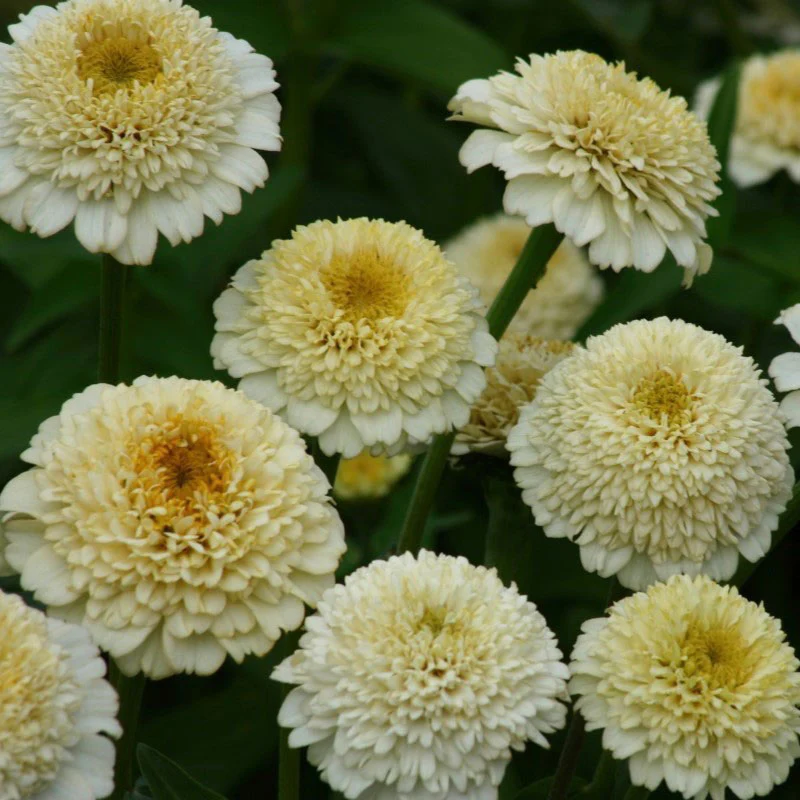
Zinderella White Zinnias introduce a fresh take on "Scabiosa-flowered" varieties, guaranteed to leave a lasting impression. Seemingly combining elements of both zinnias and marigolds, the Zinderella series produces distinctive two-inch crested blooms. Zinderella White, in particular, features an abundance of creamy petals encircling a golden center. These two to three foot tall plants are prolific bloomers, robust, and a breeze to cultivate.
Though Zinderella zinnias have been bred for more consistent scabiosa-style blooms, most single to semi-double variation is normal. You’ll see the most fully double flowers early in the season under cooler conditions; as temperatures rise, blooms may shift back toward single.
Zinderella White Zinnias introduce a fresh take on "Scabiosa-flowered" varieties, guaranteed to leave a lasting impression. Seemingly combining elements of both zinnias and marigolds, the Zinderella series produces distinctive two-inch crested blooms. Zinderella White, in particular, features an abundance of creamy petals encircling a golden center. These two to three foot tall plants are prolific bloomers, robust, and a breeze to cultivate.
Though Zinderella zinnias have been bred for more consistent scabiosa-style blooms, most single to semi-double variation is normal. You’ll see the most fully double flowers early in the season under cooler conditions; as temperatures rise, blooms may shift back toward single.
Original: $7.49
-65%$7.49
$2.62Description
Zinderella White Zinnias introduce a fresh take on "Scabiosa-flowered" varieties, guaranteed to leave a lasting impression. Seemingly combining elements of both zinnias and marigolds, the Zinderella series produces distinctive two-inch crested blooms. Zinderella White, in particular, features an abundance of creamy petals encircling a golden center. These two to three foot tall plants are prolific bloomers, robust, and a breeze to cultivate.
Though Zinderella zinnias have been bred for more consistent scabiosa-style blooms, most single to semi-double variation is normal. You’ll see the most fully double flowers early in the season under cooler conditions; as temperatures rise, blooms may shift back toward single.